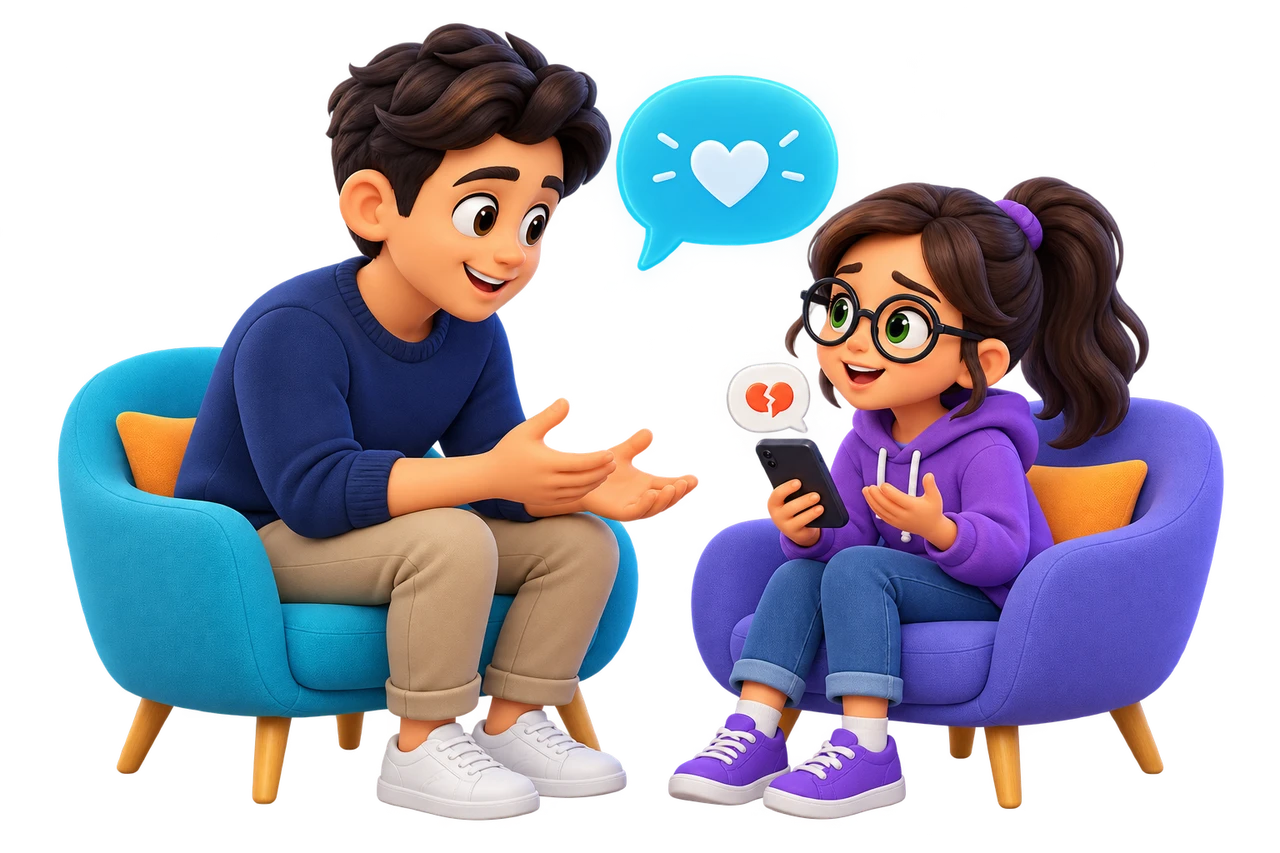
“I do not want to join the group anymore” can open an important conversation. Children may not have a precise name for what is happening. They might show a message, describe a repeated hurtful joke or suddenly avoid a game involving classmates.
A useful first response is “Thank you for telling me. Let us understand what happened together.” Listening is not inaction. It gives you the context needed to choose a proportionate response.
Describe the behaviour and its effect
UNICEF discusses exclusion, persistent messages, threats and sharing private information as forms of cyberbullying. A misunderstanding and repeated harassment need different responses, but a child does not need a perfect label before an adult helps stop harmful behaviour.
Ask who is involved, where messages appear and how long this has been happening. “What would you like to change?” invites more than “Why have you not blocked them?”. Avoid describing a child as permanently defined by this experience.
Choose a next step without increasing exposure
Keep relevant details privately: dates, account names, content addresses and appropriate screenshots. Do not circulate the messages around every parent or demand a public explanation. An attempt to defend a child can unintentionally enlarge the audience.
- Stop or limit contact through the platform’s tools.
- Report the behaviour using an official reporting channel.
- Involve the school when classmates are involved and agree who follows up.
- Check afterwards whether the messages stopped and the child feels safer.
Explain the actions you will take. The child can participate in decisions without carrying responsibility for solving the situation alone. Seek appropriate urgent assistance if there are threats or immediate danger.
Continue the conversation afterwards
Blocking a message does not necessarily end the experience. Check in over the following days without turning every conversation into an interrogation. Persistent distress or worrying changes in sleep, mood or everyday participation deserve advice from a suitable health professional.
Discuss what a bystander can do: avoid forwarding harmful content, refuse to join humiliation and tell a trusted adult. Practise with invented messages and hypothetical situations rather than another child’s personal information.
For broader communication and safety boundaries, read our guide to supporting children online. An adult’s calm, practical response helps keep the route to future conversations open.
Sources and further reading
Updated on: October 13, 2026
← Back to stories